
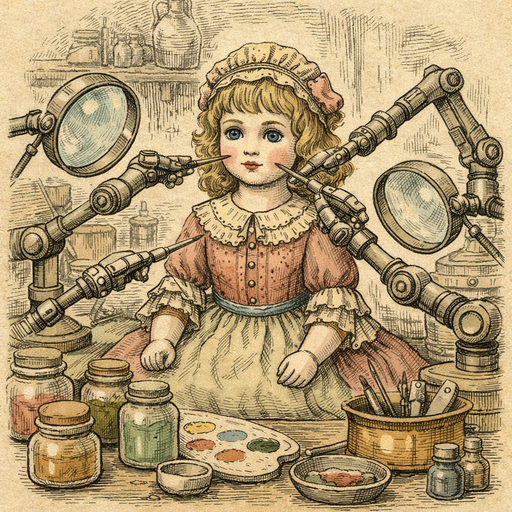
Last month, a high school in Arizona made national headlines when parents discovered the yearbook committee had been secretly retouching student photos. Not the usual "remove a pimple" kind of retouching, mind you, but full-blown digital makeovers that made teenagers look like they'd stepped off magazine covers. One parent compared before-and-after shots and found their daughter's jaw had been completely reshaped, her skin turned porcelain-smooth, and her eyes enlarged to anime proportions.
The school board meetings that followed were, according to local news reports, "more heated than a reality TV reunion show." Parents demanded answers. The yearbook advisor quit. The photography company issued a lengthy apology that somehow made things worse. But buried beneath all the drama was a fascinating question: what constitutes acceptable portrait retouching?
The Uncanny Valley of Student Photography
The Arizona controversy wasn't really about retouching itself. Professional photographers have been touching up portraits since the dawn of film photography. The problem was that these particular edits crossed into what psychologists call the "uncanny valley" - that creepy space where something looks almost human, but not quite right.
The yearbook photos suffered from what I like to call "Instagram filter syndrome." You know the look: skin so smooth it appears to be made of plastic, eyes so bright they could power a small city, and teeth so white they'd make a dentist weep with joy. The students ended up looking like AI-generated versions of themselves, which is ironic considering they were edited by actual humans.
This raises an important point about portrait retouching: the goal isn't to create a perfect person. It's to create the best version of the actual person in front of the camera. There's a delicate balance between enhancement and transformation, and crossing that line turns a photograph into a fantasy.
What Good Retouching Actually Looks Like
Professional portrait retouching follows what photographers call the "two-week rule": if a blemish, mark, or imperfection wouldn't naturally disappear within two weeks, don't touch it. That means removing temporary breakouts or minor skin irritation is fair game, but reshaping someone's nose or jawline definitely isn't.
Good retouching also respects the lighting conditions of the original photograph. If someone was photographed in harsh fluorescent lighting that made their skin look green, correcting the color cast makes sense. But if they were photographed in soft, flattering light and still don't look like a supermodel, that's just reality being reality.
The AI portrait retouching tool handles this balance particularly well because it's trained to recognize the difference between temporary imperfections and permanent features. It can smooth skin texture and reduce blemishes while preserving the natural contours and character of someone's face. The processing happens entirely in your browser, which means your photos never get uploaded anywhere - particularly important when dealing with student portraits.
The Technical Side of Subtle Enhancement
The yearbook disaster in Arizona happened partly because whoever was doing the retouching lacked restraint, but also because they were probably using tools designed for glamour photography rather than natural portrait enhancement. Fashion retouching techniques that work for magazine covers tend to look bizarre when applied to regular people in regular lighting.
Modern AI retouching solves this by being trained on thousands of natural portraits rather than heavily stylized fashion photography. The algorithms learn to distinguish between skin texture that should be preserved (natural pores, subtle lines, character marks) and temporary imperfections that can be minimized (recent breakouts, minor discoloration, harsh shadows).
The key is that good retouching should be invisible. If someone looks at a retouched portrait and thinks "wow, great retouching," then the retouching has failed. They should think "wow, great photo" and move on with their day, never realizing any enhancement took place.
When Parents (and Students) Actually Want Retouching
Here's the twist in the Arizona story that most news coverage missed: many parents were actually upset that their kids' photos hadn't been retouched enough. Apparently, the yearbook committee had applied different levels of enhancement to different students, creating an inconsistent look across the book. Some students got the full glamour treatment, while others received minimal touching up.
This inconsistency highlighted another important aspect of portrait retouching: when you're dealing with a large group of people, everyone should receive the same level of enhancement. It's not fair to give some students magazine-level retouching while leaving others completely untouched, especially when they're all paying the same photography fees.
Professional portrait photographers handle this by establishing a consistent retouching workflow that gets applied to every image. Minor blemish removal, subtle skin smoothing, and basic color correction for everyone - no exceptions, no special treatment.
The Future of School Photography
The Arizona yearbook scandal has actually prompted some interesting changes in how schools approach portrait photography. Several districts are now requiring photography companies to provide unretouched proofs alongside enhanced versions, letting families choose their preferred level of enhancement.
Some schools have gone even further, establishing official retouching guidelines that specify exactly what kinds of enhancements are acceptable. It's like having a dress code, but for digital editing. These policies typically allow for basic skin smoothing and blemish reduction while prohibiting structural changes to facial features.
The technology is also getting better at providing subtle, natural-looking enhancement. AI tools can now analyze skin tone, lighting conditions, and facial structure to apply appropriate levels of retouching automatically. This reduces the risk of overzealous editing while ensuring consistent results across large batches of photos.
Conclusion
The great yearbook retouching scandal of Arizona serves as a perfect reminder that with great retouching power comes great responsibility. The goal of portrait enhancement should always be to help people look like the best version of themselves, not like completely different people altogether. Whether you're editing school portraits or family photos, the key is subtlety, consistency, and respect for the person's natural features. After all, teenagers have enough identity confusion without their yearbook photos adding to the mix.
Try it yourself
Free, private, runs in your browser. No sign-up required.