
Picture this: it's 11pm on a Tuesday, and you get a message from a stranger on an ancestry website. They share 18% of your DNA, which apparently makes them a second cousin, a half-sibling, or, per the site's cheerful algorithm, "a close family match." They attach a photo - a single grayscale scan of two people standing in front of a building you don't recognize, dated 1943, captioned only with the words "Grandma Ruthie and her brother, before he left." Before he left for where? Nobody knows. And now you're staring at two muddy grey silhouettes trying to figure out if one of them has your grandmother's nose.
When Genealogy Goes From Hobby to Obsession in One Message
The ancestry DNA testing boom has quietly turned millions of ordinary people into accidental detectives. Sites now host billions of records and connect users to genetic relatives they didn't know existed. This is mostly wonderful. It is occasionally the plot of a thriller. But the real bottleneck, the part nobody warns you about, is the photos.
Old family photographs are almost universally terrible by modern standards. Grayscale, faded, scratched, scanned on a flatbed printer from 2009 by someone who clearly hit the "quick scan" button. You receive them and feel a strange mix of gratitude and squinting. Who are these grey ghosts? Are they stern or just cold? Is that building behind them a factory or a church?
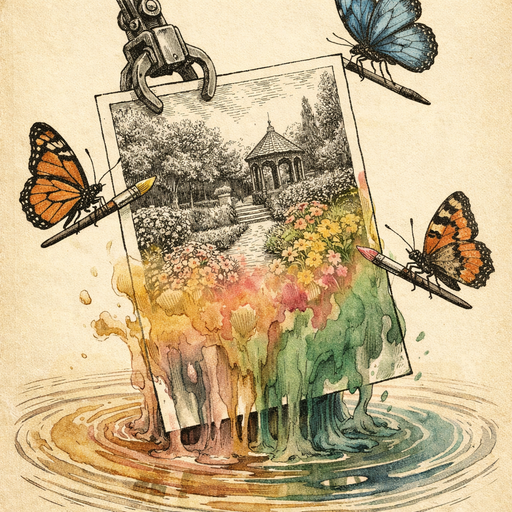
Color changes everything. Not metaphorically. Literally. When you add color to a 1940s street scene, the brown brick building becomes red. The woman's blouse shifts from a mid-grey smudge into what the AI confidently decides is a dusty rose. The man's tie becomes navy. Suddenly they're not silhouettes. They're people.
What AI Colorization Actually Does (Without the Science-Class Headache)
The AI colorization tool doesn't randomly guess. It uses a neural network trained on millions of images to understand context. Grass is probably green. Skin tones follow recognizable patterns. Military uniforms from certain eras skew olive or khaki. Wedding dresses were almost certainly white. The AI reads texture, context, and lighting to make educated color decisions that are, in many cases, startlingly plausible.
It's not magic and it's not perfect. Your great-uncle's cardigan might have been burgundy when the AI picks maroon, and nobody alive can argue the point. But the effect on comprehension and emotional connection is immediate. A grey-toned face becomes a warm-toned face. A flat photograph becomes something that looks like a memory rather than a document.
The best part for the genealogy crowd: it all runs in your browser. The photo never leaves your device. You're not uploading a scan of your grandmother to a server farm somewhere. The processing happens locally, which matters when the image is irreplaceable and the stakes feel personal.
The Practical Workflow for Mystery Match Photos
When a DNA match sends you an old photo, here's a workflow that actually works:
- Start with a scan, not a photo of a photo. If the original still exists, scan it at 600 DPI minimum. A phone camera photo of a photo, shot at an angle on a kitchen table under fluorescent light, is doing nobody any favors.
- Clean up grain and noise first. Old scans often carry decades of dust, scanner artifacts, and compression damage. Run the image through AI noise reduction before colorizing - feeding a cleaner image to the colorizer produces noticeably better results.
- Colorize with realistic expectations. The colorization tool works best on portraits and outdoor scenes. Heavily damaged or very dark images need more cleanup beforehand. Give the AI clear, readable detail to work with.
- Enhance afterwards if needed. Once colorized, use AI auto-enhance to balance brightness and contrast. Colors can sometimes appear washed out after colorization on underexposed originals, and a quick enhancement pass brings everything into balance.
- Save your original. Always keep the untouched scan. The colorized version is an interpretation, not a replacement. Future tools will be better, and future relatives will want the source file.
The Part Where This Gets Emotionally Complicated
about colorizing a photo of someone you just discovered is related to you: it works almost too well. You upload a grey stranger and get back a person who looks, disconcertingly, like someone you might have met at Thanksgiving. There's a nose you recognize. A hairline. That expression that your dad makes when he's about to disagree with something.
One genealogy forum user described colorizing a photo of a great-aunt she never knew existed and immediately bursting into tears. Not because the result was sad, but because it was sudden. A grey stranger became a red-cheeked woman in a blue coat standing in a garden, and she looked like someone you'd want to have known.
This is the unexpected power of colorization. It bypasses the brain's tendency to treat old photographs as historical artifacts and tricks it into treating them as portraits of real people. Which, of course, is what they always were.
When Colorization Helps You Actually Identify People
Beyond emotional impact, color can be a genuine research tool. Military uniform colors help narrow down branch and era. Distinctive fabric patterns that read as grey in the original can be identified after colorization and cross-referenced with period clothing records. Painted backdrops in portrait studios often had recognizable color schemes that local historians can identify.
One researcher used colorized background details to identify a studio from the specific shade of the painted backdrop, which was a regional style in a particular city during a narrow time window. That narrowed down the approximate date by a decade and helped confirm which branch of a family tree a mystery woman belonged to.
It's not forensics, exactly, but it's not nothing either.
Managing Expectations With Distant DNA Matches
Second cousins twice removed, half-great-aunts, and whatever the algorithm calls "close family (predicted)" are almost always strangers who happen to share a sliver of DNA. Many of them are wonderful. Some of them send you a single cryptic photo from 1943 and then never respond to follow-up messages. This is genealogy. This is the experience.
What you can control is the quality of the visual record you build. Colorize what you have. Store it properly. Share it back with your match and ask if anything in the color version triggers a memory they hadn't thought of yet. Sometimes it does. The woman in the dusty rose blouse rings a bell that the grey smudge never could.
Conclusion
A surprise DNA match and a blurry 1943 photo is either the beginning of a frustrating dead end or the start of something genuinely moving, and the difference is often just whether the image makes the person feel real. AI colorization doesn't change the facts of history, but it changes how your brain processes them. Grey strangers become warm-toned relatives. Unknown people become recognizable faces. And sometimes, a nose or a hairline in a colorized portrait is all it takes to confirm what the algorithm already suspected: you're looking at family. The whole process runs in your browser, takes under a minute, and your irreplaceable photo never goes anywhere you didn't ask it to go.
Try it yourself
Free, private, runs in your browser. No sign-up required.