
 June 5, 2026
 4 min read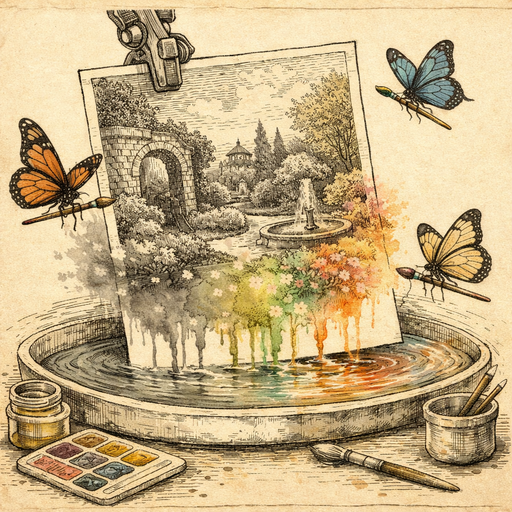
My aunt discovered a shoebox under her mother's bed containing 200 handwritten recipe cards from the 1940s. The problem? Decades of kitchen steam, sunlight, and time had bleached them into ghostly pale versions of their former selves. The ink had faded from rich blue to barely-visible gray, and the once-cheerful colored borders had turned into sad, washed-out whispers.
This scenario plays out in kitchens across America every day. Family recipe collections, the edible DNA of our heritage, are literally disappearing before our eyes. But here's the plot twist: artificial intelligence can actually reverse decades of fading and bring these culinary treasures back to life.
The Great Recipe Card Fade
Recipe cards from the mid-20th century were often printed with vibrant blues, reds, and greens. The cards themselves might have featured cheerful floral borders or retro geometric patterns. But time is not kind to paper documents. UV light breaks down the chemical bonds in ink and dyes, kitchen humidity warps the cardstock, and general handling fades the colors until everything looks like it was printed during the Great Depression.
What makes this particularly heartbreaking is that these aren't just recipes. They're historical documents. Grandma's marginalia about "add more sugar if Uncle Frank is visiting" or "this serves 6 but Jerry eats for 3" represents irreplaceable family lore. When the cards fade, we lose not just the instructions for making Swedish meatballs, but the context that made them special.
Why Scanning Alone Isn't Enough
Most people's first instinct is to scan the faded cards and call it a day. But scanning can only capture what's currently there, which in the case of severely faded documents, isn't much. You end up with digital copies that look exactly as washed-out as the originals. It's like making a photocopy of a photocopy - technically preserved, but practically useless.
The real magic happens when you can restore the original vibrancy that these cards once had. This is where AI colorization becomes genuinely useful, not as a party trick, but as a legitimate preservation tool.
How AI Brings Recipe Cards Back to Life
Modern AI colorization works by analyzing the subtle tonal variations that remain in faded documents. Even when colors appear completely gone to the human eye, there are often microscopic differences in how various inks and dyes have aged. The AI can detect these patterns and make educated guesses about what the original colors likely were.
The colorization tool processes everything right in your browser, which means your family's secret recipes never leave your device. You can upload a scan of those faded cards and experiment with different colorization approaches until you find one that looks historically accurate.
The key is understanding that you're not trying to make the cards look modern or Instagram-worthy. The goal is restoration, not enhancement. You want them to look like they did in 1952, not like they were designed yesterday.
The Technical Sweet Spot
For best results, scan your recipe cards at high resolution (at least 300 DPI) and save them as uncompressed files. The AI works better when it has more data to analyze. If the original cards have any color remaining, even if it's very faint, that gives the system valuable clues about what the full-strength colors should look like.
Don't worry about getting the colors exactly right on the first try. Since the processing happens locally in your browser, you can experiment with multiple versions until you find one that feels authentic to the era and your family's aesthetic.
Beyond Pretty Pictures: Practical Benefits
Restoring the original colors of recipe cards isn't just about nostalgia. It serves several practical purposes. First, it makes the text much more readable. When the contrast between ink and background is restored, handwriting that was barely visible becomes clear again.
Second, it helps preserve the organizational system. Many vintage recipe collections used color-coding - blue cards for desserts, green for vegetables, red for meat dishes. When those colors fade, you lose the filing system along with the visual appeal.
Third, it makes the recipes more likely to be used by younger family members. Let's be honest: faded, hard-to-read cards get ignored. Vibrant, clearly restored versions get pulled out for Sunday dinner.
The Digital Recipe Box Revolution
Once you've restored your family's recipe cards, you've essentially created a digital recipe box that can last forever without further degradation. Unlike the originals, these files won't fade, won't get splattered with tomato sauce, and won't get accidentally thrown away during spring cleaning.
You can create copies for all the siblings, cousins, and grandkids without depleting the originals. Some families are even creating beautiful printed recipe books using the restored cards as a starting point.
Conclusion
Your family's recipe collection represents generations of kitchen wisdom, holiday traditions, and food memories. When those handwritten cards start fading, you're not just losing recipes - you're losing edible history. AI colorization offers a way to turn back the clock on decades of deterioration, bringing those cards back to their original vibrancy while preserving every handwritten note and marginalia that makes them special. The best part? The entire restoration process happens right in your browser, keeping your family's culinary secrets exactly where they belong - with your family.

Try it yourself
Free, private, runs in your browser. No sign-up required.