
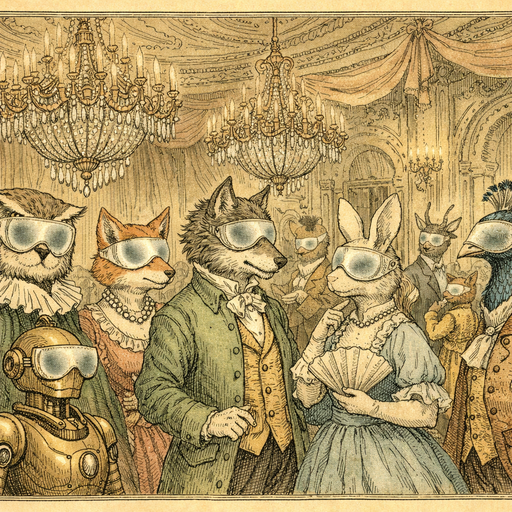
Maria had been running her "Hidden Gems of Lisbon" walking tour for two years. Five stars across the board. Glowing reviews. A waiting list in peak season. Then one Tuesday afternoon, she got a message from a guest named Tobias, a German software engineer who had joined her tour three weeks prior. Tobias had a very particular problem: his company had a strict social media policy, and his face was now beaming cheerfully from her Instagram page, her Airbnb listing, and a local tourism blog that had apparently found her profile and reposted everything. Tobias was not beaming in response to this news.
The Consent Problem That Every Experience Host Eventually Hits
Here is a scenario that plays out constantly in the experience hosting world: you lead a wonderful two-hour food tour, a kayaking adventure, or a photography workshop. You take candid shots because candid shots look authentic and authentic shots convert browsers into bookers. You post eight photos from the afternoon. Six of those photos contain identifiable faces of people who signed up to eat empanadas, not to become your promotional material.
Most guests will not care. Some will be delighted. But a small and entirely unpredictable percentage will care enormously, and the problem is you have no reliable way to know which guests belong to which category before you hit publish. Some people are in witness protection (rare, but real). Some have stalkers they are quietly managing (less rare than most people realize). Some have employers who monitor social media for brand association. Some are simply private people who consider their face to be their own business, which is, legally and morally speaking, a completely reasonable position to hold.
The Awkward Solutions Hosts Actually Try
The standard workarounds are all terrible in their own charming ways. Asking every guest to sign a photo release form before a kayaking trip turns a fun adventure into a paperwork exercise that immediately kills the vibe. Collecting verbal consent works until the one person who said yes later says they definitely did not say yes. Taking photos only of scenery and food sounds sensible until you realize that photos of scenery and food without humans in them look like stock photography, and stock photography does not make anyone want to book a tour.
Some hosts try the artistic blur, manually smearing a thumb across someone's face in their phone's photo editor. The result looks less like a privacy protection and more like evidence that something went terribly wrong with the camera. Others crop faces out entirely, which removes the very authenticity that made the photo worth taking in the first place.
What Actually Works: Blur the Faces, Keep the Moment
The approach that actually solves this cleanly is automated face detection and blurring, applied consistently before any photo goes anywhere public. The blur face tool handles this without requiring you to manually identify and smear every visible person in every frame. It finds the faces automatically and applies a clean, professional blur that preserves the energy and composition of the image while making individual identification impossible.
The result looks intentional rather than accidental, which matters more than people think. A well-blurred face in a group tour photo reads as "this host respects guest privacy." A poorly cropped or manually smeared face reads as "something went wrong here and we are not sure what." One of these builds trust. The other raises questions.
The other thing worth knowing is that the processing happens entirely in your browser. The photos never leave your device and never touch a server, which is particularly useful when you are handling images of guests who may have very specific reasons for wanting their data kept off the internet. Running privacy-protective tools through a cloud service that retains uploaded images would be a spectacular irony to avoid.
A Practical Workflow for Tour and Experience Hosts
- Shoot freely during the experience. Candid, authentic, genuine moments. Do not handicap your photography because of what comes later.
- Select your best shots for promotional use, just as you normally would.
- Run every photo containing guests through the face blur tool before it goes to Instagram, your listing page, or anywhere else public. Takes about thirty seconds per image.
- Keep the originals in a private folder. If a guest later contacts you and enthusiastically consents to being featured, you have the unblurred version ready.
- Check for anything else identifying before you post. Unique tattoos, distinctive clothing, and occasionally name tags on lanyards can identify people just as effectively as faces.
The GDPR Angle Nobody at the Hosting Platform Explains
If you host experiences in the European Union, or if you host guests who are EU residents, the General Data Protection Regulation has opinions about photographs of identifiable people. Facial images are classified as biometric data. Posting them publicly without clear, affirmative consent is not a gray area under GDPR. It is the kind of thing that generates complaints to data protection authorities, and data protection authorities have recently developed a taste for taking those complaints seriously.
The United States currently has a patchwork of state-level privacy laws rather than one unified framework, but Illinois, Texas, and Washington have biometric privacy statutes with actual enforcement teeth. The trend across jurisdictions is unmistakably toward more protection, not less. Hosts who build privacy-respecting practices now are not doing extra work. They are building a habit that will matter increasingly over time.
The Unexpected Marketing Upside
Here is the part that surprises most hosts: leaning into privacy-conscious photography can become a selling point rather than a limitation. A tour listing that explicitly mentions "we photograph the experience but protect guest privacy in all public materials" is making a promise that differentiates you from every other host who has never thought about it. For guests who are privacy-aware (and this group is growing fast), that sentence can be the reason they choose your tour over an otherwise identical competitor.
You can also combine your blurred-face guest photos with clean product and location shots to build a varied promotional library that does not rely entirely on human subjects. Dramatic detail shots of the food you tasted, wide landscape frames of the neighborhoods you walked, close-ups of the crafts you made. These complement the group photos rather than replacing them.
Conclusion
The Tobias situation resolved fine, incidentally. Maria took down the photos, reposted versions with faces blurred, and Tobias left her a fifth star review specifically mentioning that she had handled the situation "with professionalism and genuine care." She now blurs faces on every guest photo before it leaves her camera roll. Her booking rate did not drop. Her review scores did not drop. What dropped was the ambient anxiety of not knowing which of her eight hundred Instagram followers might someday send her a message like the one Tobias sent. That particular form of anxiety is worth eliminating at the cost of thirty seconds per photo, which turns out to be a very reasonable trade.
Try it yourself
Free, private, runs in your browser. No sign-up required.